The Short Answer
The best storage ideas for small spaces - like the ones you might find in a San Francisco condo, flat, or older home - are about more than how many bins you can fit inside them. Give frequently used belongings easy-to-reach homes, use overlooked vertical and under-furniture space, and reserve less accessible storage for items you need only occasionally. With a little time and effort, you can usually find a solution that respects your home’s architecture as well as safety best practices, and helps each room function at its best.
Picture it. You’re standing in a narrow closet holding a shoe rack, a vacuum, two coats, and a dream that just one more shelf would solve everything - but until you get a TARDIS, that just won’t be possible. Instead, it’s best to think about how to make better use of the space you have.
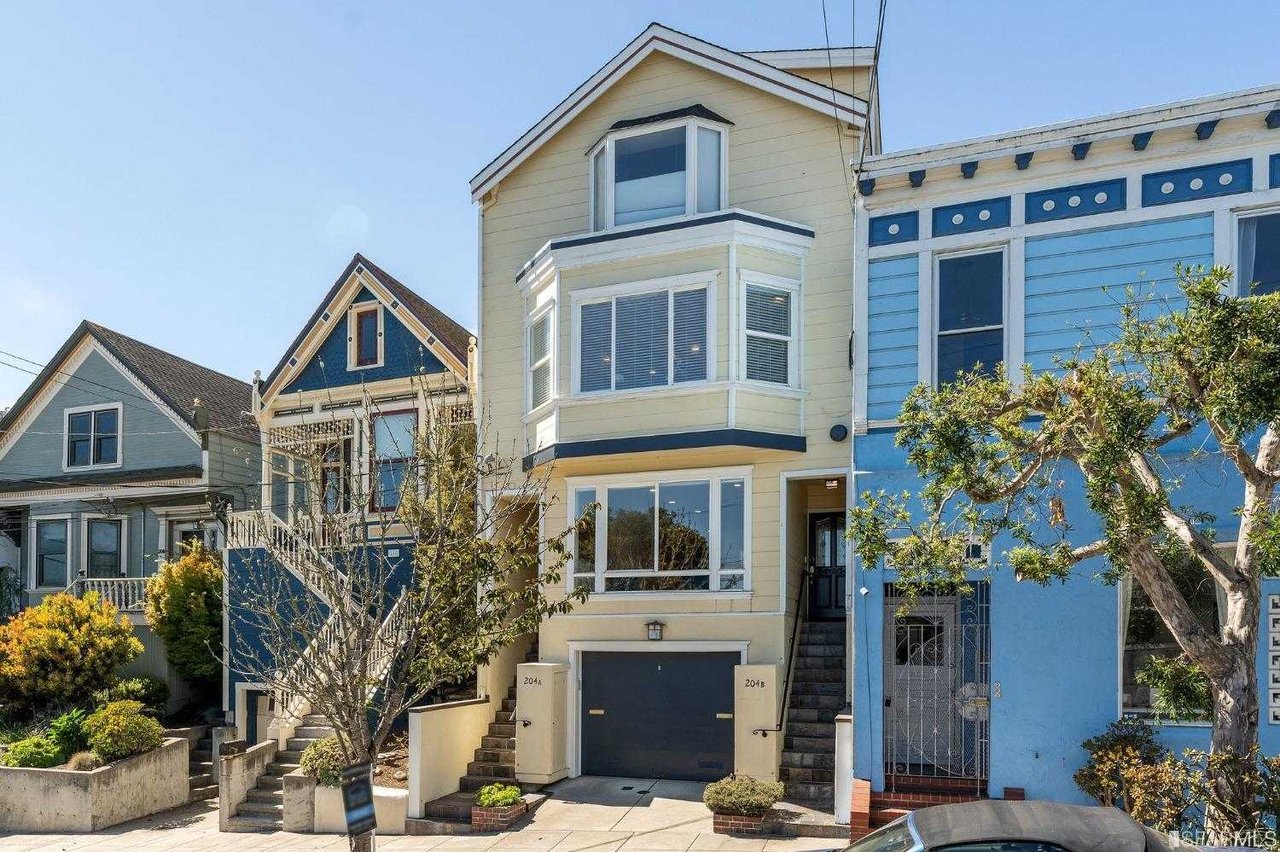
San Francisco homes add their own personalities to this assignment. Built-ins, niches, deep cabinets, narrow garages… but don’t worry! Just start by asking, “what is making this home harder to use, and which available space can solve that specific problem?”
Start by Finding the Space You’re Not Really Using
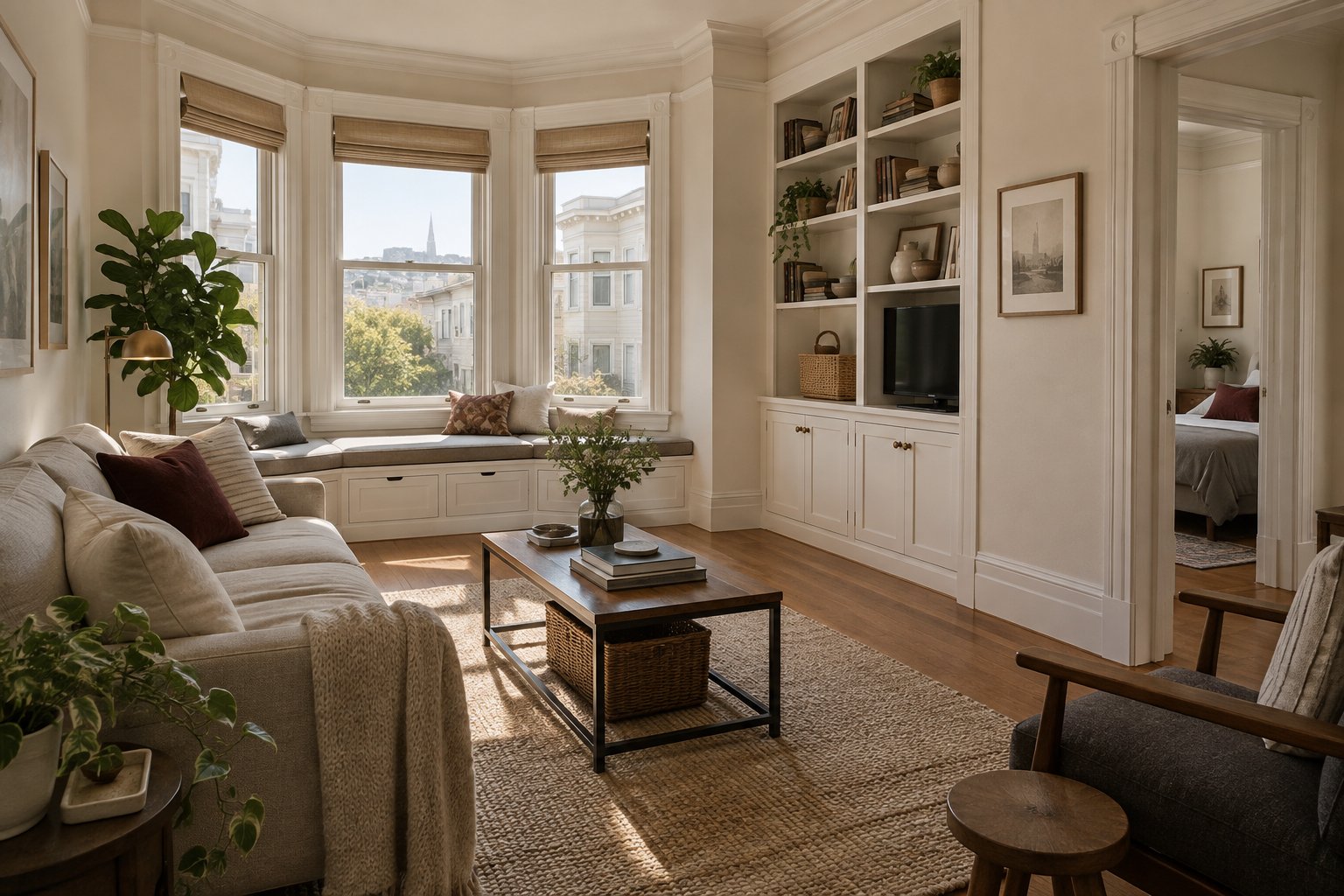
Before buying any new supplies, walk through the home and look above, below, behind, and beside what is already there. The most useful small space organization often comes from square footage you’ve simply been overlooking.
Look for:
- Open wall space above a desk, dresser, toilet, or low cabinet
- The area above existing kitchen cabinets
- Usable clearance beneath a bed
- Corners that could hold a narrow shelf or fitted piece
- The backs of doors, when hooks or shallow organizers will not interfere with closing
- Furniture that can do two jobs
Then match each opportunity to an actual need. A high shelf may be perfect for luggage or holiday decorations, but not for the coffee maker you use every morning. Under-bed drawers can hold everyday linens, but your extra special “company’s coming” sheets can take a less prominent place if necessary.
If you do decide to shop, measure first. Record width, height, and depth,and don’t forget to take into account baseboards, door swing, nearby outlets, and the clearance needed to open drawers or cabinet doors.
One more consideration matters in San Francisco: earthquake safety. Ready.gov recommends securing items that can fall and placing heavy or breakable objects on lower shelves. High storage works best for lighter, less fragile belongings. Tall or top-heavy furniture should be secured according to current safety guidance and the manufacturer’s instructions.
Make Furniture Earn the Space It Takes Up
In a compact room, every large piece of furniture uses valuable floor area. It does not need to contain storage - but if it does, that can be a great help!
Useful storage ideas for smaller homes may include:
- A bed with drawers, lift-up storage, or rolling bins - great for linens, seasonal clothing and supplies, or other items you won’t use often
- An entry bench with room inside for shoes, bags, or pet supplies
- A coffee table or side table with a shelves or drawers
- Closed cabinets, to keep clutter hidden so a room won’t feel too busy
- Wall-mounted storage, to keep as much floor space open as possible
The right choice depends on what you need to store and how often you need to retrieve it. A bed with storage can be wonderful for bulky linens - but you might find it less wonderful if getting it open means moving a nightstand, a desk, and a thick rug! Don’t forget to take into account how a storage-focused piece will interact with your other furnishings.
Remember to consider visual, not just physical, weight. Open shelving can keep books and other attractive objects accessible, but then every item is part of the room’s appearance. Closed storage can be more forgiving for less sexy items - the printer paper, spare cables, instruction manuals, and toolboxes in our lives.
For homes with children, follow the U.S. Consumer Product Safety Commission’s guidance on securing TVs and top-heavy furniture. Renters, condo owners, and TIC owners should also confirm whether a third party must authorize any alterations to the home. You may save yourself a headache if you check the lease or HOA documents before drilling.
Get More From Small or Awkward Closets
Many closet organization ideas fail because they start with a standard system instead of the closet’s actual dimensions and contents. Begin by taking everything out and grouping it by use. Then rebuild the closet around the belongings that most deserve the space.
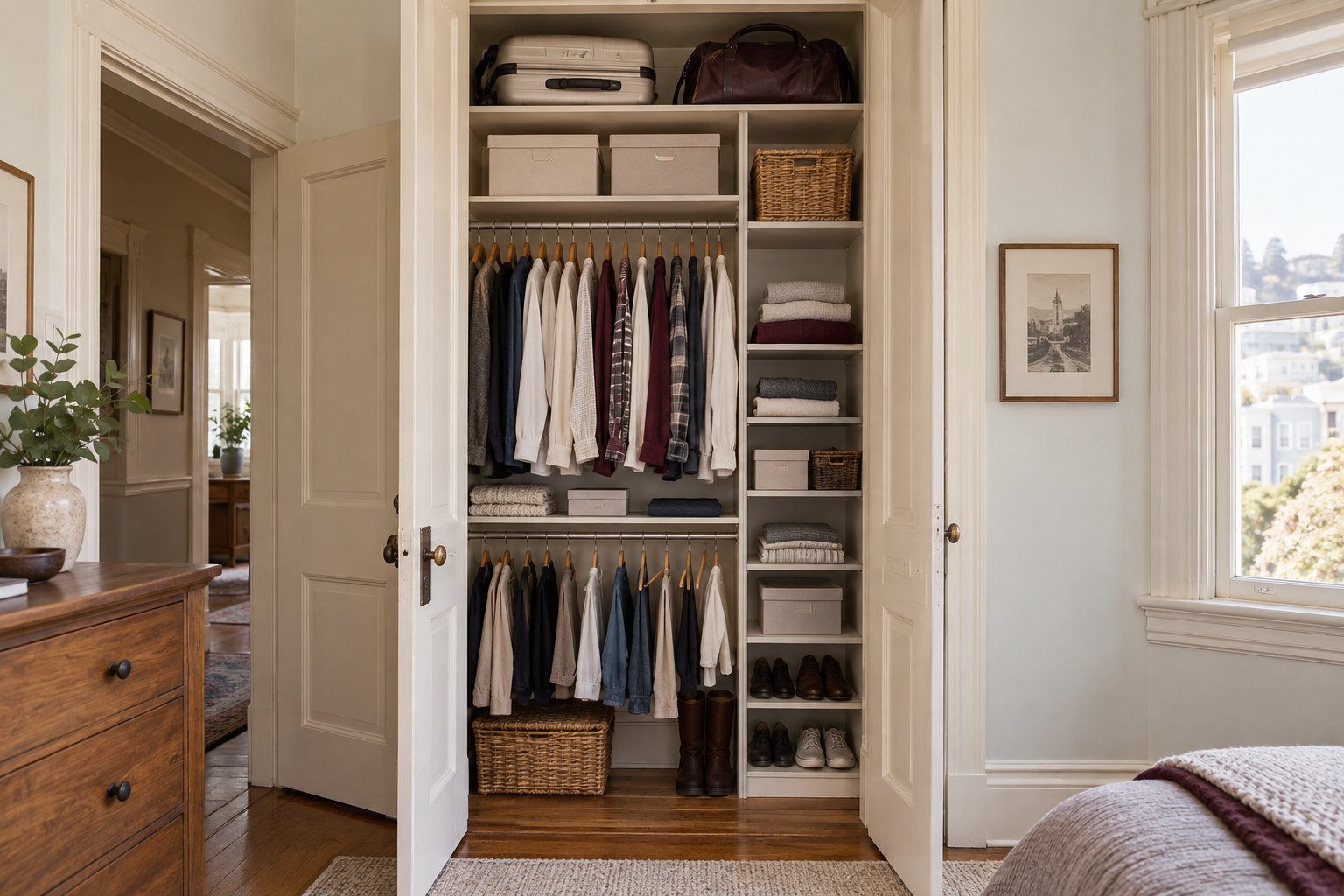
You might think about dividing a tall closet into practical zones like these:
- Prime reach zone: Clothes, shoes, towels, cleaning supplies, or household items used approximately every week.
- Low zone: Laundry, sturdy containers, or pull-out storage that can be reached without moving everything above it.
- High zone: Luggage, seasonal items, extra bedding, and lighter belongings used only occasionally.
If the existing spacing wastes height, don’t be afraid to consider adjustable shelves. A second hanging rod may work if you have a lot of short clothing. Shelf dividers can keep folded items from amalgamating into one leaning tower. A shallow organizer on the back of the door may add capacity, as long as the door can still close easily.
Avoid giving the most reachable shelf to something you use twice a year. Prime closet space should serve daily life. If the vacuum comes out every week, it should not have to skulk behind the holiday decorations, the guest bedding, and a box labeled “miscellaneous.” (But does the vacuum come out every week? No judgment - just be honest with yourself about what’s important to you, and work from there.)
Give Everyday Things an Easy Place to Land
The most effective home organization ideas solve repeat annoyances close to where they occur. If you run into the same problem frequently, start making a list! Then you can think about how to deal with them efficiently.
At the entry, that may mean a small tray for keys, hooks for bags and dog gear, a designated place for mail, and storage for your most frequently worn shoes. You already know you don’t have a mudroom, so the goal isn’t to shoehorn one in - it’s to prevent the things you might have put in one from spilling over into your whole house when you need them!
In the kitchen, keep frequently used tools near the place they are used. If countertop space is limited, identify which appliances truly need permanent residence there. Customized cabinet shelves and drawer dividers can help. Think about what’s most easily portable - you might choose to keep some heavy or bulky appliances down lower than things you use more often if lifting is difficult for you.
In the bathroom, shallow wall storage, a medicine cabinet, baskets inside a vanity, or shelves (placed away from splash zones!) can free up counter space. In a work area, one charging station can keep cables and devices from spreading across the room.
Convenience is the difference between a system that lasts and a system that looks excellent for one weekend. If putting something away takes four steps, two hands, and a stepladder, you will probably leave it out. Just don’t let that happen.
Use the Garage for More Than a Collection of Mystery Boxes
If you’re lucky enough to have a garage, know that it can be one of the most useful storage areas in a San Francisco home, but of course it’s seldom a perfect empty rectangle. You must also consider parking, laundry, a water heater, bicycles, waste bins, electrical equipment, stairs into the home… at the end of the day, you’re often working with a somewhat irregular space.
No problem. Start with what’s nonnegotiable. Park your vehicle or vehicles where they’ll really be. Open the doors and walk the routes you’ll need. Storage should fit around those movements, without turning them into awkward shuffles.
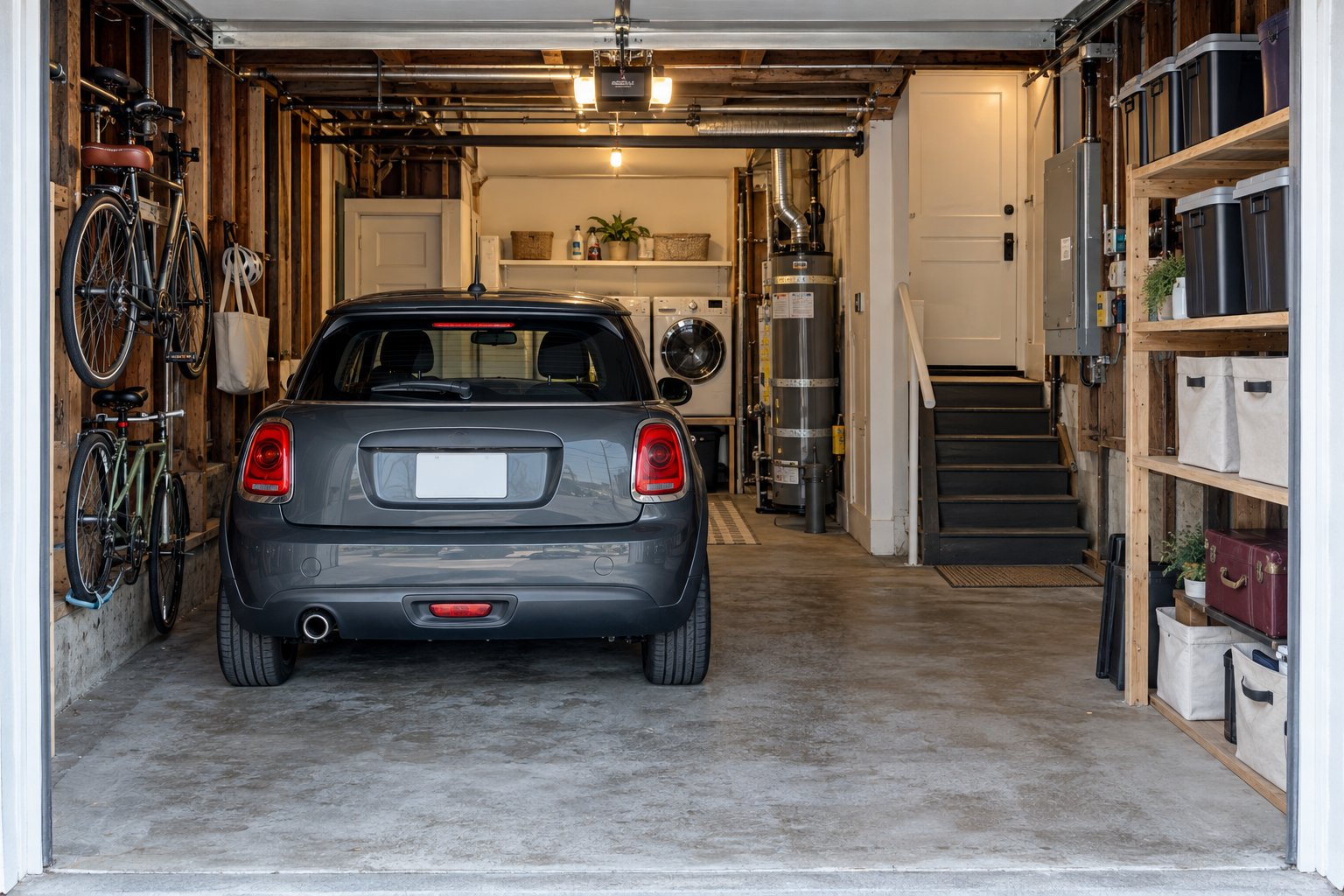
Useful garage organization ideas include:
- Shelving that keeps belongings off the floor and visible
- Clearly labeled, closed containers for dust-prone or fragile items
- A defined, out-of-the-way spot for bikes and other large equipment
- Heavier belongings stored low and lighter items stored higher
Sort before you build more capacity. You want one container labeled “camping” that contains all the right gear, not nine mystery boxes into which it’s scattered. And whatever you do, don’t buy a tenth!
Shared garages require even more care. Use only the storage area assigned to the unit, and preserve access to parking, utilities, fire equipment, and exits, because you share responsibility for a space that affects another family too. It’s wise to review the building’s governing documents or management rules before installing anything. San Francisco’s residential building maintenance guidance includes specific rules for garages and storage areas in certain multi-unit buildings.
Older Homes May Need Storage Solutions That Work With the Architecture
Standard storage systems are designed around standard dimensions. Older San Francisco homes are not always interested in participating.
Before trying to make an unusual room behave like a new-build rectangle, study what the architecture already provides. A shallow built-in may be just right for books, serving pieces, or linens. A niche beside a fireplace could hold a well-fitted cabinet. The space beneath stairs may be useful, although any equipment already living there should take first priority.
Reversible solutions are often a good starting point. A freestanding cabinet, adjustable shelving, or storage furniture allow you to test an idea without permanently changing a room. This can be especially helpful for renters or owners who are uncertain whether a built-in will improve the space enough to justify the cost and commitment.
Simple organizing is one thing. Cutting into walls, altering historic material, relocating systems, or building storage near existing utilities is another. A qualified contractor or other appropriate professional should evaluate that work, along with any permit or building-approval requirements, before it starts. The San Francisco Department of Building Inspection is the city authority for current building-permit and code information.
If you may sell in the near future, remember that permanent storage becomes part of how buyers interpret the room. Built-ins can be helpful when they fit the architecture and preserve the room’s function. They can also make a small room feel even smaller when depth, doors, and circulation were not carefully planned.
Think in Inches, but Live in the Whole Room
The goal is not maximum storage capacity. The goal is a home that works.
Before calling a plan finished, walk through the room as if it were an ordinary weekday. Can you open the closet fully? Sit at the table without moving a bin? Reach the window? Vacuum around the furniture? Carry laundry up the stairs? Put away the things you use most without rearranging everything else?
A room that holds more but becomes harder to use has not solved the original problem. Keep enough open space for movement, cleaning, light, and the activities the room is supposed to support in the first place.
By the way, these principles also matter when evaluating a home you’re not yet living in for your future needs!. Buyers should look beyond the number of closets and consider whether their actual belongings and routines fit the layout. Sellers should show storage honestly and keep things edited enough that buyers can understand its dimensions. Homeowners deciding whether to renovate should compare the gain in storage with the effect on the room, budget, and future flexibility.
How a home handles coats, bicycles, laundry, work equipment, and everyday clutter is part of how that home lives. If you are buying, selling, or deciding whether a layout can work better, Team Howe can help you evaluate the practical tradeoffs that come with your real estate decisions.
Frequently Asked Questions About Small-Space Storage
How do I create more storage in a small apartment?
How can I organize a small closet with limited shelving?
What furniture works best for small-space storage?
How do I organize a small garage without losing usable floor space?

About Me and Team Howe
About Me and Team Howe
A Former Techie Who Still Loves Systems
Before real estate, I worked as a financial analyst. After earning a master’s degree in software systems engineering, I moved into tech and worked as a programmer, database administrator, quality assurance manager, and business analyst for 13 years. This may explain my fanatical love of spreadsheets. It definitely explains why “the numbers look about right” is not in my vocabulary.
I moved into real estate in 2007 and founded Team Howe so our clients could receive direct agent involvement along with dedicated buyer, listing, marketing, and transaction support. Team Howe affiliated with Compass in 2025.
I live in Forest Hill Extension with my husband, our son, cats Fuz (Lightyear) and Taco (Belle) and dog Peanut (Butter).
Founder, Team Howe | Compass