
The Short Answer
A bathroom window that fogs up after a shower isn’t automatically a problem. A sill that stays wet, or paint that keeps peeling around the frame, deserves a closer look. You don’t need to assume the worst, but you do need to find out why it’s happening.
Before you buy new windows or book a painter, notice where the water appears and when. Those details can help you avoid paying for a fix that doesn’t solve the problem.
Start with which side of the glass is wet
A hot shower or a pot simmering on the stove adds moisture to indoor air. When that air meets cold window glass, some of the moisture can turn into droplets. As Pella explains in its guide to window condensation, that can happen even when there’s nothing wrong with the window itself.
If the moisture is on the inside, wipe it away and help the room dry out. Use the exhaust fan, and open a window when conditions allow. Pull back the curtains or raise the blinds so air can circulate around the glass. Then check the sill and frame, too. A clear pane doesn’t tell you whether the wood below it is still wet.
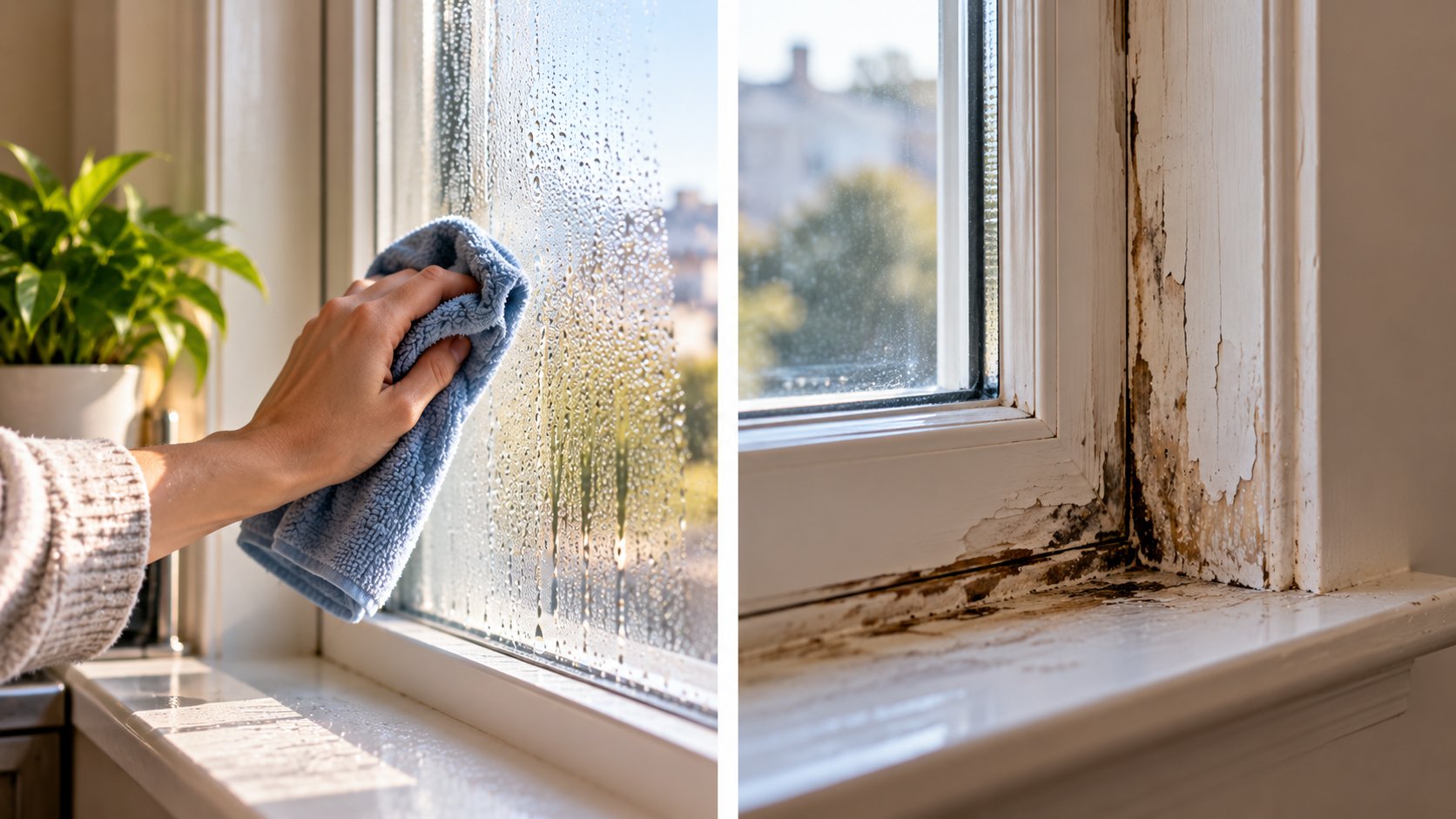
An occasional episode that dries completely may just need watching. If you’re drying the same sill every morning, look more closely at the room’s humidity and ventilation. ENERGY STAR’s guidance on managing indoor humidity explains how reducing moisture at the source can help. I’d want to understand that before recommending replacement windows.
Moisture on the outside of the glass is usually a different story. It can be ordinary dew, much like the moisture on a car windshield in the morning. Milgard’s explanation of exterior window condensation covers why this can happen even with energy-efficient windows. That alone doesn’t mean water is getting into your home.
Fog between the panes needs a different approach
If the fog is trapped between the panes of a sealed double- or triple-pane window, cleaning the glass won’t reach it. That generally points to a problem with the seal in the insulated glass unit, which is the sealed assembly of glass panes. Milgard identifies moisture between panes as a reason to have the unit evaluated.
It doesn’t automatically mean you need to replace the entire window. Depending on its construction and condition, replacing just the sealed glass unit may be possible. Have a window professional look at the frame and installation, too, before deciding what to replace. We’d be glad to help you find someone to take a look.
Pay attention to when the water shows up
A window that fogs while you’re cooking suggests a different starting point from a stain that reappears after every rain. Water under the sink raises another set of questions. These observations won’t give you a complete diagnosis, but they’re useful information for whoever comes to investigate.
Look for moisture around accessible plumbing connections and fixtures. Check the ceiling below an upstairs bathroom. Keep an eye on a wall where the paint has started to bubble. And don’t assume the visible stain marks the source: water can move through a building before showing up somewhere you can see it.
The EPA’s room-by-room moisture guide illustrates how leaks can affect walls and cabinets, sometimes out of sight. A plumber is a reasonable first call for an apparent plumbing leak. Rain-related staining may need a roofer or someone who works on windows and exterior walls, depending on where it appears.
When the source isn’t clear, ask for help identifying it rather than choosing a repair based only on the location of the stain.
Take a photo before the evidence dries up
Moisture has an inconvenient habit of disappearing just before someone arrives to look at it. Take a few photos while it’s visible, without delaying urgent repairs, and make a note of:
- What was happening: Had it rained? Had someone just showered, or were you cooking?
- Where it appeared: Was it on the glass, around the frame, or somewhere else?
- How often it happens: Is this new, or have you been wiping up the same spot for weeks?
- What’s changing: Is the stain growing? Is paint peeling, or does the area stay damp?
A note on your phone is plenty. No spreadsheet required.
If there’s a musty smell, mention that, too. The EPA includes odors and visible water damage among the clues that warrant further investigation. They don’t prove there’s mold or a hidden leak, but they shouldn’t be dismissed because the surface looks dry today.
Give the bathroom a chance to dry
Bathrooms produce plenty of moisture, but a few everyday habits can help keep it from lingering. The EPA recommends running the bathroom exhaust fan or opening a window when showering. Keep the fan running afterward while the room dries, and use the window when it’s safe and practical. Squeegee the shower walls, wipe water off the windowsill, and spread towels out rather than leaving them in a damp heap.
Then pay attention to what happens between showers. Does the room dry out, or is there still dampness around the window hours later? In an older San Francisco flat, work with the bathroom you actually have. If the existing fan or window isn’t doing enough, ask a professional what would improve the ventilation.
Check the caulk and nearby finishes as part of that routine. Worn caulk needs maintenance, but a wet spot that keeps coming back deserves an explanation before you simply cover it up. Even during a foggy San Francisco week, don’t write off recurring indoor dampness as just the weather.
Preventing mold means dealing with the moisture
A wet window doesn’t automatically mean you have mold. Persistent moisture does give it an opportunity to grow, though, which is why drying the surface is only part of the job. The EPA’s guidance on moisture control and mold prevention starts with fixing leaks and addressing whatever is keeping an area damp. Painting over the stain won’t do that.
If you suspect mold, the next step depends on the extent of the problem and what materials are affected. The EPA provides cleanup guidance for small areas, generally less than about 10 square feet, including precautions to take before starting. For larger areas or extensive water damage, get advice from someone experienced in mold assessment or cleanup. Sewage or other contaminated water calls for professional cleanup, regardless of the size of the patch.
Don’t pull off wallpaper or open a wall to investigate suspected hidden mold yourself. The EPA warns that disturbing hidden mold can release spores, so that investigation is best left to an experienced professional.
And if water may be reaching wiring, outlets, or light fixtures, keep away from the affected electrical components and get qualified help promptly. The Consumer Product Safety Commission’s guidance on water-damaged electrical equipment explains why wet electrical equipment needs professional attention before it’s used again.
Selling soon? Sort out the moisture before the paint
Put recurring condensation and water stains on the preparation list early. Finding the source may take longer than touching up the finish, and the repair may affect when other work can happen. It’s much easier to plan for that before the painters are booked.
Once the moisture problem has been addressed and the affected materials are dry and ready, you can decide what needs repainting or replacing. Otherwise, you risk paying to make the same spot look good twice.
Bring up known water problems and previous repairs when you prepare your disclosures, too. The California Department of Real Estate emphasizes full and honest disclosure about a property’s condition. Don’t assume that fixing a leak means its history no longer matters. Keep the reports and repair records, and discuss any questions about what to disclose with your agent or a real estate attorney.
For a condo or TIC, check the governing documents and confirm who is responsible before scheduling work on a window, exterior wall, or shared plumbing. Your HOA or co-owners may need to be involved. The window may be in your living room, but that doesn’t necessarily make the repair yours alone to arrange.
For more on planning the work, see our guide to what San Francisco sellers should fix before listing.
If you’re preparing to sell and aren’t sure where a moisture concern belongs on the to-do list, get in touch with Team Howe. We can help you find the right person to evaluate it and work the next steps into your preparation schedule.
FAQ
Window Condensation and Moisture FAQ
What causes window condensation inside a house?
Moisture in indoor air can collect on cold glass. Cooking and showers add humidity, while closed curtains or limited ventilation can reduce air circulation around a window. These common causes of condensation are a useful starting point, but recurring dampness also deserves a look at the surrounding materials.
Does window condensation mean I have a mold problem?
No, not by itself. The concern is moisture that lingers or keeps returning. Dry the wet area and find out why it’s getting damp. If you notice suspected mold, follow appropriate cleanup guidance or get professional advice.
How can I tell if there’s moisture in my walls?
Recurring stains, peeling paint, soft material, or a persistent musty smell can be clues to a moisture problem. They can’t tell you exactly what’s happening inside the wall. Have an unexplained or worsening problem evaluated rather than opening the wall yourself.
How can I tell condensation from a water leak?
Start with the timing and location. Droplets on the inside glass after a shower suggest condensation; a stain that returns after rain or water near plumbing may point to a leak. The EPA’s home moisture guide gives examples of both. The patterns are clues, not proof, so get help if the cause isn’t clear.

About Me and Team Howe
A Former Techie Who Still Loves Systems
Before real estate, I worked as a financial analyst. After earning a master's degree in software systems engineering, I moved into tech and worked as a programmer, database administrator, quality assurance manager, and business analyst for 13 years. This may explain my fanatical love of spreadsheets. It definitely explains why "the numbers look about right" is not in my vocabulary.
I moved into real estate in 2007 and founded Team Howe so our clients could receive direct agent involvement along with dedicated buyer, listing, marketing, and transaction support. Team Howe affiliated with Compass in 2025.
I live in Forest Hill Extension with my husband, our son, cats Fuz (Lightyear) and Taco (Belle) and dog Peanut (Butter).
Founder, Team Howe | Compass