The Short Answer
To keep bugs out of your house in the fall, seal the gaps they use to get in, take away the food and moisture that draw them, and deal with the first ant trail or gnat cloud quickly before it can become a big deal. In San Francisco, the first rains of the season often send Argentine ants indoors, and damp corners in older homes give drain flies, silverfish, and rodents plenty of places to settle. Most of this you can take care of yourself, but a few signs could mean it’s time to call a professional.
Does Halloween have you thinking about ghosts, ghouls, and eerie animals of all sorts? Me too! I love spooky decorations this time of year. Real spiders, mice, and ants, though, are another matter. The only creepy-crawlies invited in this Halloween are the plastic ones.
Fall is when a lot of pests start looking for a way inside. As the nights become cooler, it’s time to get serious about whether you want them joining in your cuddle puddle! The good news is that most of the work is simple: close off the entry methods they use and give them fewer reasons to stay if they get in anyway. These fall pest control tips will help you do both, and help you spot when a problem has moved past the do-it-yourself stage.
Why fall sends pests looking for a way in
Argentine ants are the most common household ant in the Bay Area, and they tend to move indoors during cold, wet weather. The San Mateo County Mosquito and Vector Control District notes that ants coming in to escape the rain usually head back outside once things dry out, which should comfort you if you just watched a trail of them march across the kitchen counter.
Rats are part of city life, too. UC IPM, the University of California’s pest management program, notes that roof rats and Norway rats are present in almost all California cities. As the nights get colder, they’re looking for shelter like everyone else.
Older San Francisco homes can make that search easier than it needs to be. Original windows, foundations that have settled over the decades, crawlspaces, and gaps around old pipes can all leave openings. After the fog rolls in, the lower levels, garages, and bathrooms of some homes may not fully dry out, which is exactly what many pests are hoping for.
Seal the house before anything else
So what to do? Blocking the way in does more than any after-the-fact treatment, so start here. UC IPM recommends sealing holes and gaps larger than 1/4 inch to keep out both rats and mice, using materials like steel wool, wire screen, or sheet metal. Young rats can squeeze under a door with only a 1/2-inch gap, so don’t forget to check the bottom of the door just as closely as the walls.
Walk the house with a flashlight and check:
- Doors: Add door sweeps or threshold seals, including on the garage door and the door from the garage into the house. Check the gap where double doors meet, too.
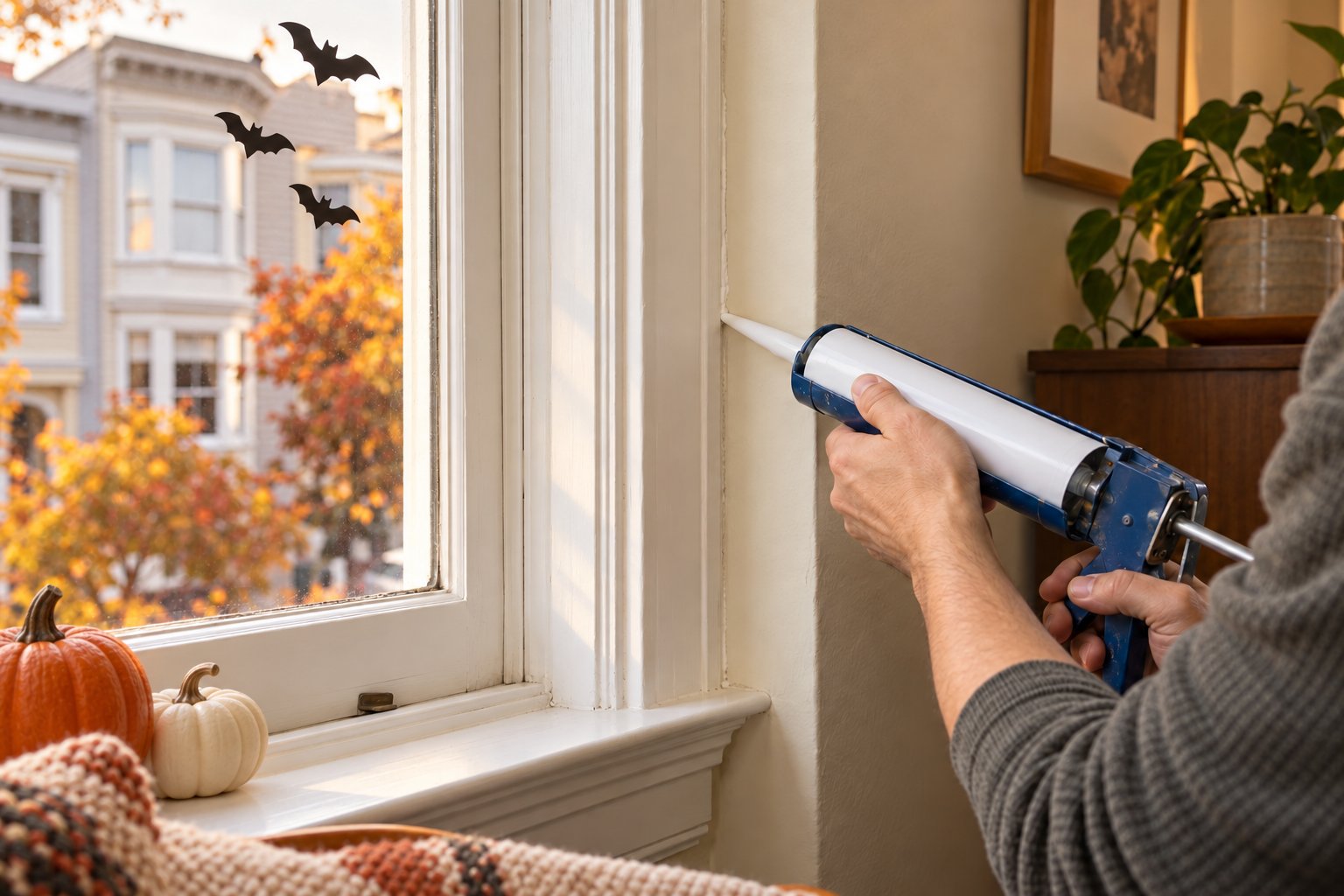
- Windows and baseboards: A few hours with a tube of caulk and some weatherstripping can close a lot of small gaps. This helps with energy efficiency, too.
- Pipes, wires, and vents: Look where plumbing, gas, and cable lines come through the walls. Crawlspace and foundation vents should be covered with sturdy galvanized wire mesh. UC IPM highlights that chicken wire alone is too lightweight to keep rats out.
- The roofline: Roof rats are excellent climbers, so openings near the eaves and roof need attention too, not just the ones at ground level.
Gaps in a foundation, a damaged roof, or other major structural problems should be addressed by the appropriate professional. If you find moisture or wood damage around an old window while you’re caulking, our guide to window condensation and when to look closer can help you decide what to do next.
When the first rain sends the ants inside
You’ll usually spot them on a kitchen counter, a bathroom windowsill, or around your pets’ food bowls (and they won’t even ask to share!). If the ants came in to escape the rain, many will leave on their own once the weather dries out, so there’s no need to panic.
To get rid of ants in the house efficiently:
- Wipe up their trail with soapy water. UC IPM notes that soapy water removes the scent trail ants follow, especially when you clean thoroughly at the entry point.
- Follow the trail back to where the ants are getting in, then seal it with caulk.
- If they keep coming back, use bait stations near the entry points. Baits are carried back to the colony, while sprays kill only the ants you can see. If one bait isn’t working, the vector control district suggests trying a product with a different active ingredient.
Gnats or drain flies? Start by figuring out which one you have
Small flies in the house are usually one of two things, and the fix depends on which. Watch where they gather.
Fungus gnats
Fungus gnats are small, dark flies that hover around houseplants, and they come from potting soil that stays too wet. The adults don’t bite or damage plants, though their larvae can harm the roots of seedlings and young plants. Let the top of the soil dry out between waterings, and use yellow sticky traps to catch the adults. If one plant is badly affected, keep it away from your other plants until it’s under control, and use fresh, pasteurized potting mix when you repot.
Drain flies
Drain flies, also called moth flies, are fuzzy, moth-like flies about 1/8 inch long that you’ll usually find near sinks and showers. They breed in the slimy buildup that coats the inside of drains. Pouring boiling water down the drain is a common suggestion, but UC IPM points out that it can offer short-term relief at best, because it doesn’t effectively remove that buildup. Scrub inside the drain with a stiff brush instead, and use an enzymatic drain cleaner to help keep the buildup from returning. Check the shower or tub too, even if it’s in a spare or guest bathroom that isn’t used often. A quiet drain can still be a busy nursery.
Spiders, silverfish, and other fans of damp corners
Moisture and clutter are these visitors’ favorite things. Basements, garages, and storage under the stairs are their preferred hiding places. Have cardboard boxes been stacking up for a while in your home? You may have been designing their dream condo!
Silverfish prefer damp, cool places and feed on starchy materials like wallpaper paste, glue, and certain fabrics. The National Pesticide Information Center recommends removing cardboard and newspaper they might like to hide in, using a dehumidifier if necessary, and sealing cracks. Swapping cardboard boxes for lidded plastic bins helps on several fronts. While you’re swapping containers, it’s a good time to thin out what’s inside! For more ideas, see our post on small-space storage in San Francisco condos, flats, and older homes.
Spiders do deserve at least a little credit. UC IPM considers them mostly beneficial because they eat pest insects, so the ones in the garage are doing some unpaid pest control. Inside the house, though, it’s a different conversation. Vacuum up the spider and its web, seal gaps around windows and doors, and keep clutter from building up so its cousins won’t have places to nest in the future. UC IPM notes that pesticides generally aren’t needed to deal with spiders.
Kitchen habits that keep pests from moving in
Pests come for the food, so the kitchen is where a little routine goes a long way.
- Store food in containers with tight-fitting lids. That includes pet food, flour, grains, and snacks you keep around for a while. UC IPM recommends sturdier containers than simple plastic bags, even if they have a zip lock.
- Watch the pantry for moths. Small moths flying around the cupboard, or fine silken threads in a bag of grains, are the usual signs. Throw out anything infested, vacuum the corners, and wash the shelves with soap and water. Flour, grains, and spices you use only occasionally can live in the freezer.
- Do the dishes every night. Even a little food residue is a feast for bugs. Tell your kids we said so!
- Mind the bins. Wash the indoor trash can now and then, and keep outdoor bins a few feet from the house with the lids closed.

Low-toxicity options, used carefully
Diatomaceous earth is a fine powder that dries out crawling insects, and a thin layer along entry points can add a line of defense. It works only when it stays dry and undisturbed, so it’s better suited to a dry spot behind an appliance than a damp bathroom floor.
Use a product labeled for indoor insect control and follow the label. Apply it thinly, avoid breathing the dust while you set it up, and keep it where children and pets can’t get into it. The National Pesticide Information Center notes that inhaling it can irritate the nose and airways, so a light hand is the right approach.
When it’s time to call a professional
Some problems are past the weekend stage. Call a licensed pest professional if you notice:
- Signs of rats: droppings near pet food or in storage areas, noises in the attic or walls at night, or dark rub marks along beams, pipes, and walls where rats travel.
- Ants that keep coming back long after the weather has dried out, even with baits in place.
- Signs of termites: small piles of tiny pellets beneath wood, winged insects inside the house in late summer or fall, or wood that’s damaged or soft. UC IPM notes that judging the extent of an infestation takes experience and is best left to a professional.
- Signs of wood-boring beetles: If any wood framing, siding, or decking wood has a series of tiny pinholes visible in the wood, or little piles of fine powder under this wood, that could be a sign of wood-boring beetles. Contact a licensed pest control vendor for an inspection and a determination on whether an insecticide will suffice or if the wood is no longer structurally sound and needs to be replaced.
If you’ve reached that point, don’t hesitate to reach out. I’d love to recommend a San Francisco pest professional who can help protect the investment you’ve made in your home by sending the bugs packing.
If you’re buying or selling, the pest report matters
A structural pest inspection, sometimes called a termite inspection or termite report, is a standard part of many San Francisco disclosure packages. The licensed pest inspector looks for wood-destroying pests and organisms, which include termites, wood-boring beetles, fungus, and dry rot, and evaluates the property for conditions that invite them in. This type of inspection covers only those pests that could damage the structural integrity of the home, and does not cover other ordinary household pests.
How to read the findings
Findings usually fall into two groups. The first covers active problems the inspector could see, such as termites, wood-boring beetles, fungus, or dry rot. The second covers conditions where no damage was found yet, but there is a situation likely to cause trouble later, such as moisture, a plumbing leak, or wood in contact with soil. Some reports also list areas the inspector couldn’t reach, with a recommendation for further inspection.
Who pays for which work is something buyers and sellers negotiate, and it varies from sale to sale.
For sellers, a pre-listing pest inspection lets you see the findings before buyers do, so you can decide what to repair, what to disclose, and how it fits your pricing and timing. We have options to help you cover the cost of pre-sale preparation, and our guide to what San Francisco sellers should fix before listing walks through how to prioritize the work.
For buyers, the pest report should be read alongside the rest of the disclosure package, since a moisture finding there may connect to something in the general inspection or the seller’s disclosures. When you’re looking for an agent, you should be confident they know how to read these documents, as we cover in our primer on how to choose the best real estate agent in San Francisco.
A quick fall pest checklist
- Seal gaps larger than 1/4 inch with steel wool, wire screen, or sheet metal.
- Add door sweeps, including on the garage door.
- Cover crawlspace and foundation vents with sturdy galvanized wire mesh.
- Bait ants instead of spraying them, and wipe the trail with soapy water.
- Let houseplant soil dry between waterings.
- Scrub drains with a stiff brush and use an enzymatic cleaner.
- Move storage out of cardboard and into lidded bins.
- Store food and pet food in containers with tight-fitting lids.
Close the gaps, clear out the cardboard, and keep the snacks sealed. The plastic spiders can stay on the porch.
FAQ
Fall Pest Prevention FAQ
How do I keep bugs out of my house in the fall?
In most homes, start by sealing gaps around doors, windows, pipes, and vents, since keeping pests out works better than treating them once they’re in. Then take away what draws them, such as uncovered food, damp corners, and cardboard storage. Deal with ant trails and small flies early, before they spread.
Why are ants coming into my house after it rains?
Most likely because they’re looking for shelter. In the Bay Area, Argentine ants tend to move indoors during cold, wet weather, and many head back outside once conditions dry out. Wiping the trail with soapy water and sealing the entry point usually helps, and bait stations are the next step if they keep returning.
How do I get rid of gnats in my house?
It depends on which kind you have. Small flies around houseplants are usually fungus gnats, which you can manage by letting the soil dry between waterings and using yellow sticky cards. Fuzzy flies near sinks and showers are usually drain flies, which come from buildup inside the drain, so scrubbing the drain with a stiff brush works better than pouring boiling water down it.
How do I keep mice and rats out of an older San Francisco home?
In most cases, seal every opening larger than 1/4 inch, add door sweeps, and cover vents with sturdy galvanized wire mesh rather than chicken wire. Check the roofline as well, since roof rats climb. If you see droppings or hear activity in the walls or attic, it’s time to call a licensed pest professional.
What does a termite report show when you buy or sell a home?
In general, it separates active problems, such as termites or dry rot the inspector could see, from conditions likely to cause trouble later, such as moisture or wood touching soil. Some reports also note areas that need further inspection. Who pays for each item is negotiated between the buyer and seller. Please note that this type of inspection only shows pests that affect the structural integrity of a wood-framed house. This report will not cover ants, cockroaches, silverfish, rats, or other pests that do not damage wood.

About Me and Team Howe
A Former Techie Who Still Loves Systems
Before real estate, I worked as a financial analyst. After earning a master's degree in software systems engineering, I moved into tech and worked as a programmer, database administrator, quality assurance manager, and business analyst for 13 years. This may explain my fanatical love of spreadsheets. It definitely explains why "the numbers look about right" is not in my vocabulary.
I moved into real estate in 2007 and founded Team Howe so our clients could receive direct agent involvement along with dedicated buyer, listing, marketing, and transaction support. Team Howe affiliated with Compass in 2025.
I live in Forest Hill Extension with my husband, our son, cats Fuz (Lightyear) and Taco (Belle) and dog Peanut (Butter).
Founder, Team Howe | Compass