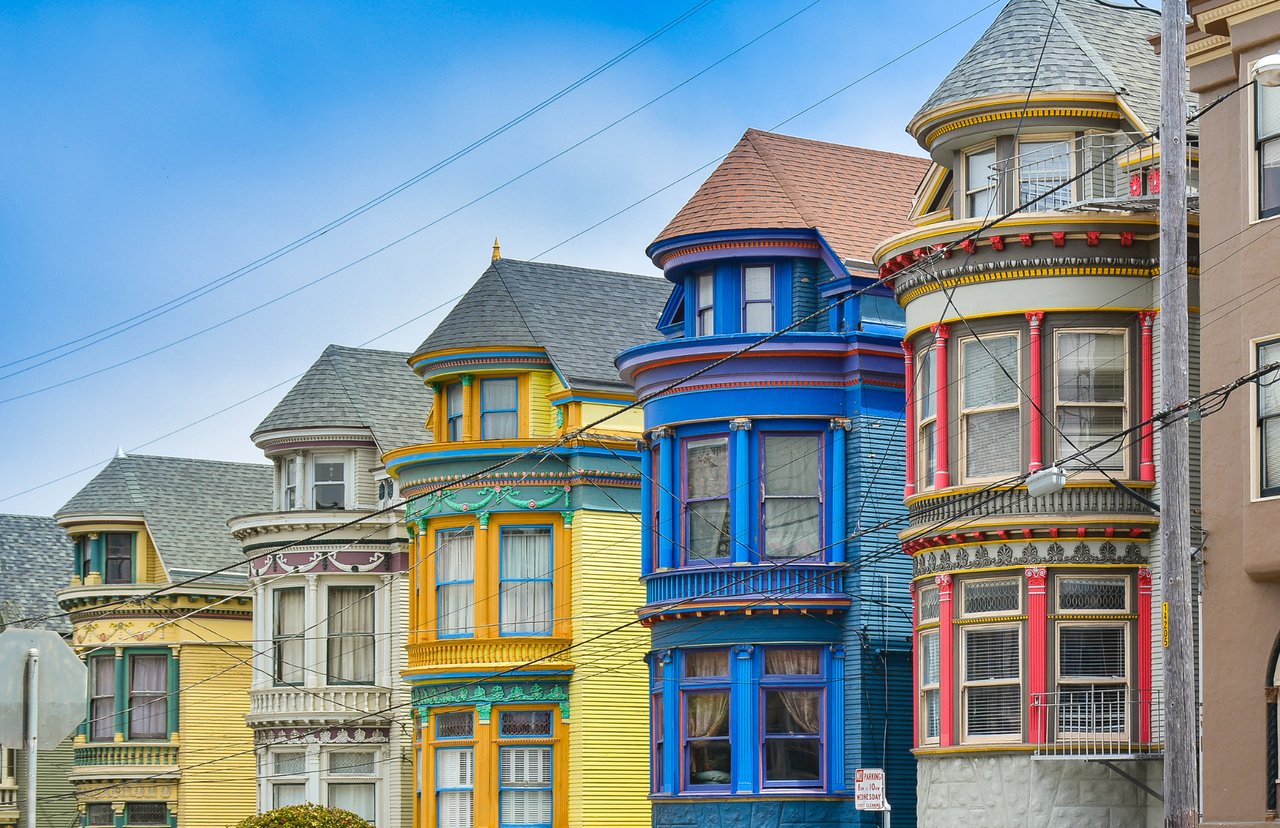
2026 Real Estate Market Outlook: National Trends vs. San Francisco Housing Reality
Sherri Howe January 8, 2026
Sherri Howe January 8, 2026
2026 Real Estate Market Outlook: National Trends vs. San Francisco Reality
The 2026 housing market is defined less by national averages and more by local market dynamics. After several years of adjustment driven by higher mortgage rates and affordability pressure, the U.S. market is settling into a period of relative stability, with modest inventory growth and generally flat pricing.
San Francisco, however, continues to diverge from national norms. Following a multi-year correction, the city showed renewed momentum heading into 2026, especially for single-family homes. Buyer competition has returned faster than in many markets, supported by structural supply constraints and improving confidence tied to the tech and AI economy.
Understanding the difference between national trends and San Francisco’s reality is critical. The FAQs below break down what to expect in 2026, covering prices, mortgage rates, inventory, competition, and risk, to help buyers and sellers can make informed decisions.
1) Will home prices go up or down in 2026?
National perspective:
Nationally, the most likely outcome for 2026 is price stability rather than a major move up or down. Forecasts cluster around flat to slightly positive appreciation, driven by a tug-of-war between affordability constraints and chronically low housing supply. While some overheated Sunbelt markets may see modest declines, most regions are expected to hover near zero growth, with upside potential if rates ease meaningfully.
Will home prices go up or down in San Francisco in 2026?
San Francisco is not tracking the national average. After several years of correction, SF entered late 2025 with renewed price momentum, particularly for single-family homes. Buyer competition returned faster than expected, pushing prices higher despite mortgage rates remaining elevated. In 2026, SF prices are more likely to rise modestly, especially in prime neighborhoods.
2) Will mortgage rates fall in 2026?
National perspective:
Mortgage rates are expected to remain range-bound, not dramatically lower. Most outlooks suggest rates oscillating in the mid-6% range, with volatility tied closely to labor market data and inflation trends. A sharp drop in rates would likely require economic softness, meaning that affordability could improve, but confidence may weaken.
How will 2026 mortgage rates affect San Francisco real estatee?
While rates matter everywhere, SF buyers are historically less rate-sensitive than the national average due to higher incomes and equity-heavy purchases. In recent quarters, SF demand rebounded even without rate relief. For 2026, rates will influence the competitiveness of bidding, but they are unlikely to suppress demand entirely in desirable SF submarkets.
3) Will housing inventory grow in 2026?
National perspective:
Yes, gradually. National inventory has been recovering from historic lows and is expected to continue improving in 2026 as more sellers accept that ultra-low mortgage rates are unlikely to return soon. That said, inventory will still sit below long-term norms, keeping a floor under prices.
Will housing inventory grow in San Francisco in 2026?
SF inventory behaves very differently. It is highly seasonal and tightly constrained by geography and policy. While more listings are appearing year-over-year, demand has returned faster than supply, especially for single-family houses. In 2026, inventory may rise modestly, but not enough to shift leverage decisively to buyers.
4) Will 2026 be a buyer’s market or seller’s market?
National perspective:
Nationally, 2026 looks like a balanced-to-slightly buyer-favorable market compared to the frenzy of prior years. Buyers have more negotiating power, fewer bidding wars, and greater choice, particularly for homes that are overpriced or need work.
Will 2026 be a buyer’s or seller’s market in San Francisco?
San Francisco’s market generally segmented between condos and single-family homes. The market for condos is closer to balance, while the market for single-family homes remains seller-leaning. Well-located, move-in-ready single-family homes often attract multiple offers, while overpriced or compromised properties sit. In short: strategy matters more than ever.
5) Are bidding wars coming back in 2026?
National perspective:
On a broad scale, bidding wars are selective, not universal. They tend to reappear when rates dip or when inventory tightens seasonally, but they are no longer the default experience. Many buyers can still negotiate, especially outside top-tier metros.
Will there be bidding wars for San Francisco real estate in 2026?
In San Francisco, bidding wars never fully disappeared. By late 2025, overbidding returned meaningfully for single-family homes, while condos lagged behind. In 2026, expect continued competition for quality homes, especially those priced intentionally to attract multiple offers.
6) How long will homes take to sell in 2026?
National perspective:
Homes are taking longer to sell than during the pandemic boom, but this is still faster than historical averages in many areas. Well-priced listings move, while aspirational pricing leads to reductions. Days on market are increasingly a pricing signal, not just a timing issue.
How long will San Francisco homes take to sell in 2026?
The SF market is sharply split. Houses often sell quickly, within a few weeks or less, while condos may linger. In 2026, days on market will depend less on market conditions and more on pricing accuracy, presentation, and neighborhood demand.
7) Will condos or single-family homes perform better in 2026?
National perspective:
Nationally, higher-end and lower-density properties continue to outperform entry-level homes constrained by affordability. Condos perform best in urban cores with strong job growth, but results vary widely by city.
Will condos or single-family homes perform better in San Francisco in 2026?
Single-family homes remain the clear outperformer in SF. Condos are stabilizing and selectively improving, especially larger units in well-managed buildings, but they lack the scarcity premium of houses. In 2026, condos offer opportunity for buyers, while houses command competition.
8) Is a housing crash likely in 2026?
National perspective:
A systemic crash appears unlikely. Lending standards remain tight, homeowners are equity-rich, and supply is constrained. The more realistic risk is localized softness, not a nationwide collapse.
Is a housing crash likely in San Francisco in 2026?
San Francisco prices can be volatile, but the city’s recent rebound underscores how quickly demand can return when confidence improves. Unless there is a major shock to the tech economy, a crash scenario looks highly improbable for 2026.
9) What’s the single biggest thing to watch in real estate in 2026?
National perspective:
Watch the relationship between mortgage rates and employment. If rates fall because inflation cools while jobs remain strong, housing activity accelerates. If rates fall due to economic weakness, demand may stay muted.
What’s the single biggest thing to watch in San Francisco real estate in 2026?
Watch AI-driven job growth, startup funding, and return-to-office trends. These factors are already reshaping buyer confidence in SF and will matter far more than national averages in 2026.
10) Who is the best realtor to help me navigate the San Francisco market in 2026?
San Francisco is a micro-market city where outcomes vary block by block and property by property. You deserve a realtor with local market mastery, a proven track record, exceptional communication and service skills, negotiation experience, and marketing and tech savvy. Sherri Howe has a strong reputation among her clients and colleagues as just that kind of agent.
Here’s a bit about Sherri by the numbers:
Buyers and sellers choose Sherri for her strong reputation throughout the San Francisco Realtor community for comprehensive research, thorough education, and complete transparency. Her client testimonials feature words like “detail-oriented,” “knowledgeable,” “responsive,” “organized,” and “patient” again and again. Sherri also has the backing of Compass, San Francisco’s strongest brokerage, which provided high-level analysis for this overview.
Feel free to give Sherri a call (415.640.4664) or send her an email ([email protected]). She’d love to learn more about your plans to buy or sell San Francisco real estate, and work together to find out if she could be the San Francisco realtor for you! Want more reading in the meantime? Check out Compass’s 2026 Housing Market Outlook for the national big picture – but for detailed San Francisco insights, you can’t do better than Sherri Howe.
Stay up to date on the latest real estate trends.

Informative