The Short Answer
Are you considering how to increase your home’s curb appeal? Some of the best things to do are the ones that won’t leave you with more work every weekend. Clean and repair what's already there, make sure the front door is ready for its closeup, and choose plantings that match the light, wind, and space conditions of your property. Especially in San Francisco, where a front yard is uncommon, less is more!
Fix What's Already There Before You Buy Anything New
The fastest improvement to the front of a San Francisco home is usually done by subtraction. Fog and salty air can leave a film on windows, railings, light fixtures, and painted trim. Wind and rain can add to the wear too. You’ll want to take care of all this before you pick out plants.
Start here:
- Wash the windows, entry door, railings, and any glass in light fixtures.
- Repair what's visibly broken or loose: a gate latch, a wobbly rail, a cracked step, a sagging house number.
- Trim planting that's growing across your path in or onto the sidewalk.
- Unless you have a perfect green thumb, remove dead or half-dead plants now, instead of waiting for a miraculous recovery.
- Check that the house numbers are legible from the street, including after dark.
- Replace burned-out exterior bulbs, and use the same color temperature in every fixture so the entry doesn't glow two different colors.
Try walking across the street, turning around, and approaching your house the way someone seeing it for the first time might. You might catch little things you’ve been glossing over for years.
Make the Front Door the Star of the Show
Curb appeal is in large part entry appeal. Especially if you don’t have much frontage, the door might have a big part to play.
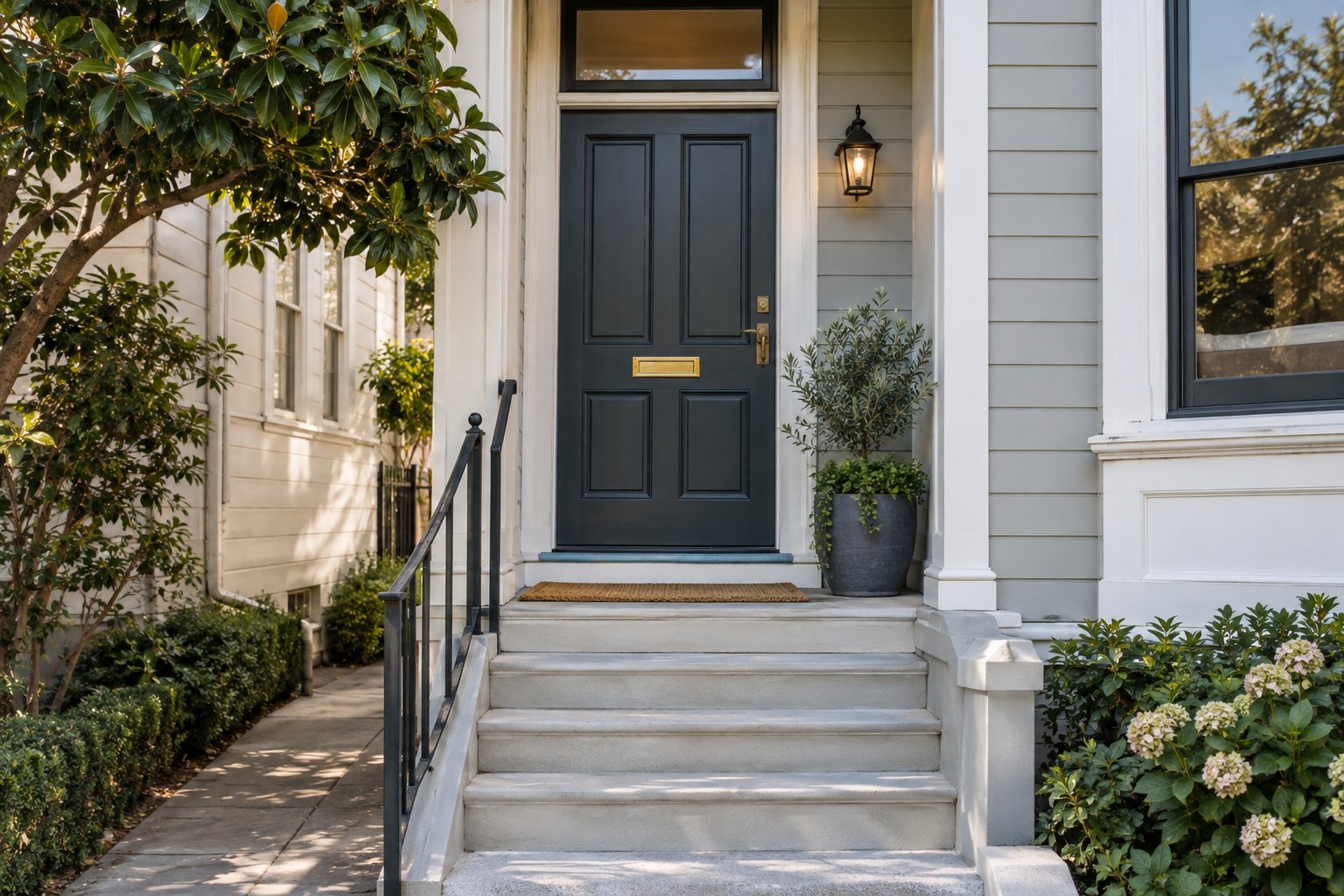
Look at its finish and whether the paint has chipped or faded. Look at the hardware, which often needs a polish, or just a replacement - think of it like jewelry for your door! Look at whether the numbers, the light, and the doormat feel like they belong to the same house.
Ask whether the route from the street is obvious. If a visitor has to wonder whether they should use the steps or the gate or something else, you may want to clear things up visually. Nobody wants to have to solve a puzzle to make it to your doorstep!.
Choose Plantings for the Site You Actually Have
You might have verdant dreams, but be honest with yourself about what your home can support. No matter how much you love a certain plant, if it won’t thrive in the conditions you can offer it, leave it for someone else to enjoy and pick something else. Consider:
- How many hours of sun the area you are considering planting in gets.
- Wind and fog exposure, which differs widely across the city - what worked for you in Noe Valley may not be repeatable in the Sunset.
- The planting depth and soil type you have available, whether in a narrow bed, a raised planter, or freestanding containers on a landing.
- How the planting will be watered, including whether your hose will easily reach where you need it to.
- The mature size of each plant - not just its size in the nursery pot.
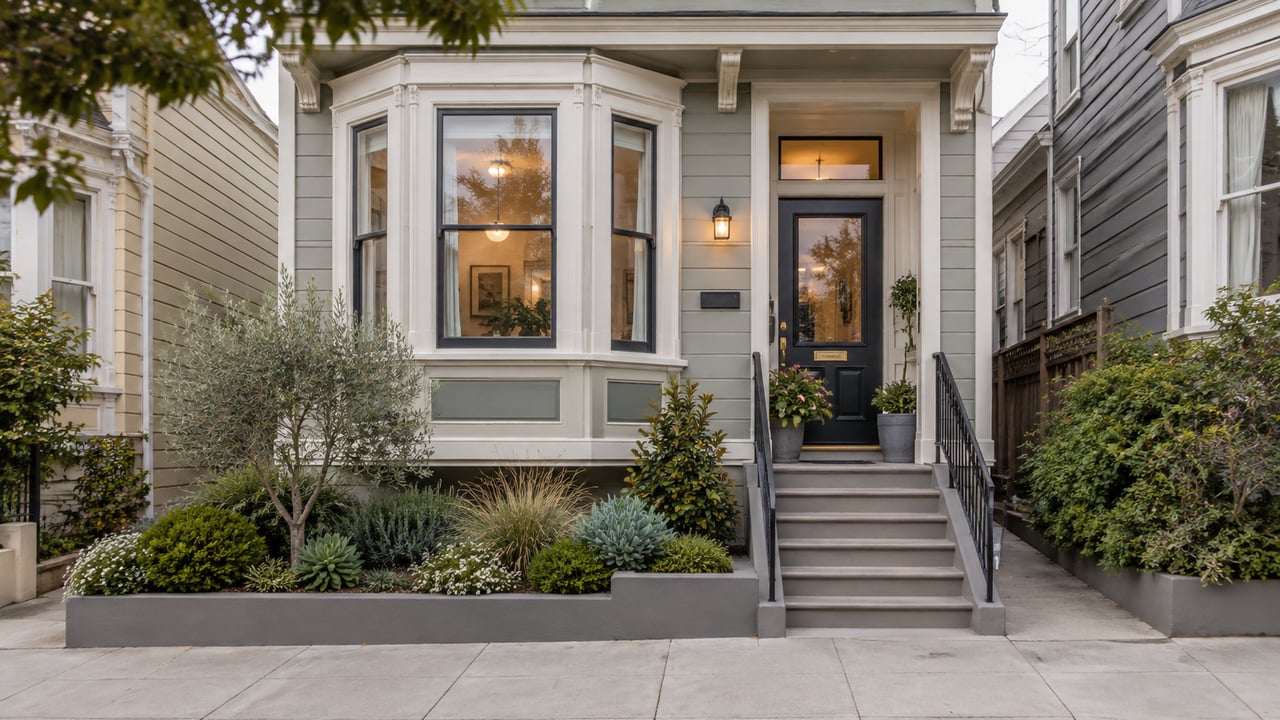
Freestanding containers can offer additional control over soil and placement, and allow you to move a plant if things aren't working. In-ground planting is less flexible but usually needs less watering attention once established. If you don’t have much landscaping experience, there’s no shame in taking the easier route, at least at first!
For plant selection specific to your exposure and soil, a local nursery or a landscaping professional is a good call. If your planting area extends into the sidewalk strip, that space is in the city’s right-of-way. San Francisco Public Works issues sidewalk landscaping permits for converting part of a sidewalk into a planted area, so confirm current requirements before you plant or pour anything there.
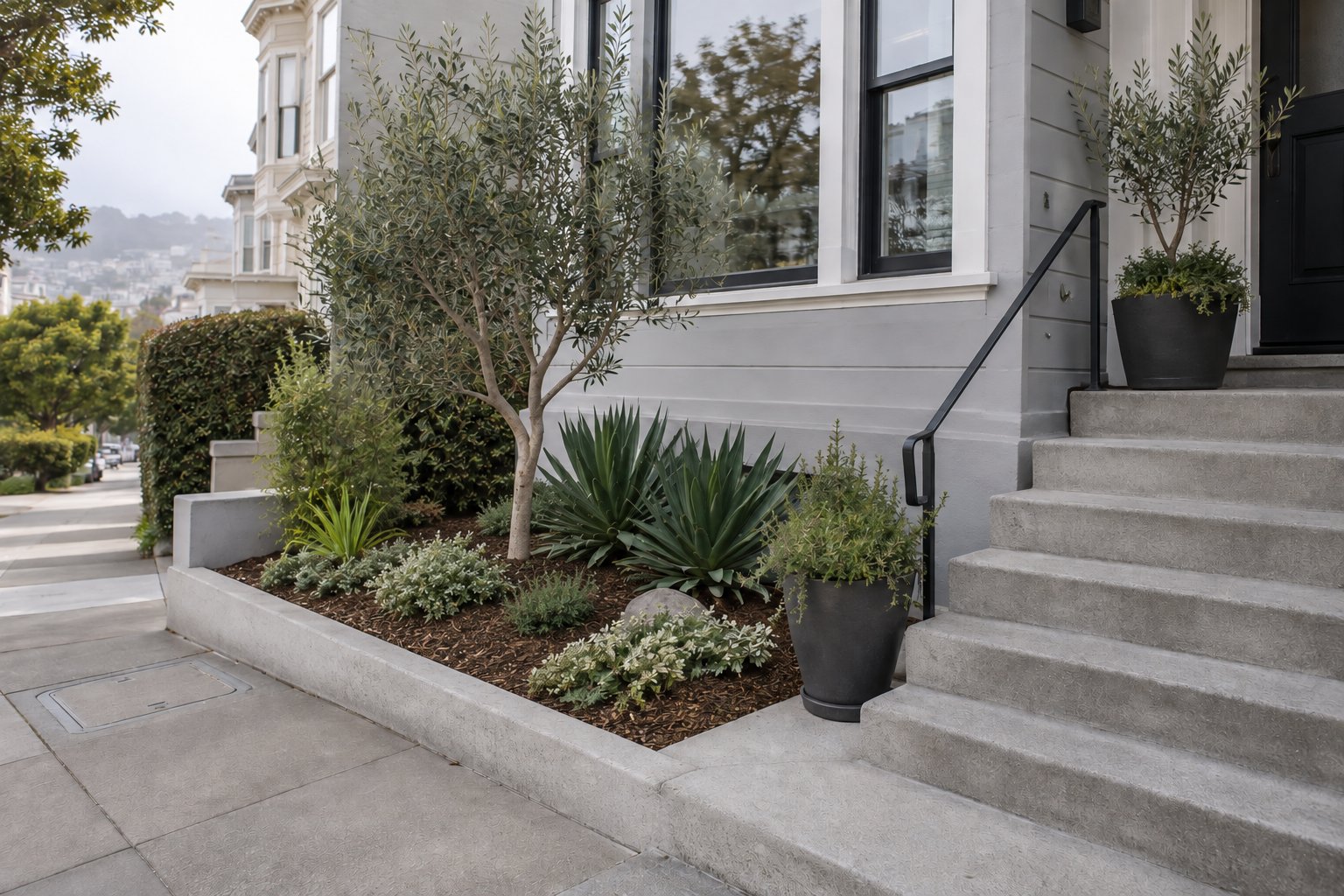
Low-Maintenance and Drought-Tolerant Planting Aren't Quite the Same Thing
Low maintenance landscaping is less about specific types of plantings than about thoughtful design decisions. Many different types of landscaping can be low maintenance with good planning. Just a few areas, chosen carefully, will always be easier to keep up than many small ones scattered around.
If you’re considering anything that depends on regular shearing, deadheading, or seasonal replacement, ask yourself whether you’ll really keep the schedule up. Nobody will judge you for picking something easier, but your neighbors might if your doorstep turns into a symphony of brown! Adding mulch where it's appropriate keeps weeds down and moisture in.
If you’re thinking about drought tolerance in particular, that’s when your choice of what to plant can be more limited. Keep in mind that even these plants need some maintenance, especially when new. Give them regular water, especially while they get established, and weed and prune as needed.
Before committing to a planting plan, check current local guidance. The San Francisco Public Utilities Commission's water-wise garden resources point to plant lists selected for San Francisco conditions, along with current info about potential rebates and other programs, which change from time to time.
Small Front Yards Reward Restraint
If you have a small front yard, enjoy it, but don’t crowd it! Too many different plant types in a small bed can read as cluttered, especially once they reach their mature sizes. Save “they grow up so fast!” for the kids and grandkids in your family, not the shrubs in your yard..
A few rules of thumb that generally hold up:
- Repeat a limited number of plant types instead of introducing a new one every few feet.
- Leave the stairs, gate swing, garage door, meters, and utility access completely clear.
- Use containers when a permanent bed isn't practical, and place them where they can't become a trip hazard in your path.
A small front yard doesn't have to hold much, but a few tastefully selected plantings can make a big difference you’ll appreciate every day.
Don’t Forget to Think About the Hardscape
Steps, railings, paths, gates, fences, and retaining walls, are just as much a part of your home’s first impression as any shrub. A gate that drags, a railing that jiggles, or a chipped step can send a negative message about the whole property, and cause legitimate safety hazards.
This doesn’t mean you should necessarily plan for major construction. Just fix anything that’s damaged, consider easy cosmetic fixes, and make a plan to avoid damage in the future. Remember also that, in San Francisco, property owners are responsible for maintaining the sidewalk adjacent to their property. Get ahead of a cracked or lifted section before it trips someone or causes other problems.
If you do have to undertake this or other major work, consult a licensed professional first. We maintain a list of trusted peers, and we’d love to help you figure out who to send your questions to and what you should ask!
Holiday Decorations: Pick One Good Piece and Stop!
Once you’ve curated a beautiful entryway, don’t let seasonal decorating take over. Consider one substantial piece per holiday, like a well-made wreath or an attractive lantern, with enough presence to be seen from the sidewalk. Let that speak for your festive cheer if you can. Or maybe two pieces? Sherri insists her 12 foot tall Halloween skeleton human can’t be out front without its trusted 7 foot long skeleton dog!
Just one piece per season or holiday is easier to store and faster to install. We don’t hate whimsy, and if a pumpkin for everyone is nonnegotiable, we’d never try to talk you out of it! Just keep in mind your ability to maintain more elaborate displays. Always avoid stringing cords across steps or using anything not rated for outdoor use outside.
And be a good sport - take decor tied to holidays down roughly when everyone else does. You don’t want to be that neighbor who still has Frosty the Snowman up in March.
Thinking of Selling? Start From the Sidewalk
Buyers start forming an opinion the minute they spot your home, whether in person or through photography.
So evaluate the front of the house from the sidewalk first. Remove distractions before adding anything decorative. A clean and uncluttered entry will photograph better than a busy one. Be sure to coordinate any exterior work so it will be done in time for pictures, but keep in mind that whatever you spend outside won’t be available for interior work. This is why we recommend you consult with us as early as possible in the process to determine the best use of prep funds.
Our San Francisco seller preparation guidance covers how to decide which repairs earn their place on the list, and our seller resources walk through the full preparation sequence. The same clear-the-clutter logic we suggest you follow outside applies once you're through the door too, check out our post on small-space storage in condos, flats, and older homes! For insights tailored to your particular home, contact us to start a conversation.
Curb Appeal FAQ
What are some easy curb appeal ideas for a small front yard?
Start with maintenance rather than additions. Clean the entry, repair anything loose or broken, remove dead plantings, confirm the house numbers are clear and exterior lighting works well, and keep the path and stairs clear. If you add anything, one or two simple containers near the door usually do more than too many plants crowded into a too-small space.
What landscaping requires less maintenance?
Plantings that match the site's light, wind exposure, and soil, arranged in fewer and larger areas rather than many small ones, will require less maintenance. If your design depends on frequent trimming, seasonal replacement, or rigorous water routines, ask yourself whether you’ll really keep up!
Is drought-tolerant landscaping low maintenance?
Not necessarily. Drought tolerant plants usually still need regular water while they establish, plus weeding, pruning, and occasional replacement.
What curb appeal improvements should I make before selling?
Remove doubts before you add decoration: focus on cleaning, repairs visible damage, clearing overgrown planting, and making the entry easy to reach and well lit. Bigger exterior projects should be evaluated against the rest of your preparation plan, your timeline, and what buyers are responding to in he current market.

About Me and Team Howe
About Me and Team Howe
A Former Techie Who Still Loves Systems
Before real estate, I worked as a financial analyst. After earning a master’s degree in software systems engineering, I moved into tech and worked as a programmer, database administrator, quality assurance manager, and business analyst for 13 years. This may explain my fanatical love of spreadsheets. It definitely explains why “the numbers look about right” is not in my vocabulary.
I moved into real estate in 2007 and founded Team Howe so our clients could receive direct agent involvement along with dedicated buyer, listing, marketing, and transaction support. Team Howe affiliated with Compass in 2025.
I live in Forest Hill Extension with my husband, our son, cats Fuz (Lightyear) and Taco (Belle) and dog Peanut (Butter).
Founder, Team Howe | Compass